What STANAG 4569 covers
A STANAG is a NATO standardisation agreement. STANAG 4569, "Protection Levels for Occupants of Logistic and Light Armoured Vehicles", sets out the protection levels, while the test procedures are described in Allied Engineering Publication AEP-55. Volume 1 of AEP-55 covers kinetic energy and artillery threats and Volume 2 covers mine blast. Edition 2 of the STANAG was issued in 2012. Protection against improvised explosive devices is handled in separate, non-public documents.
The standard looks at three threat types: kinetic energy (bullets and armour-piercing projectiles), artillery fragments and mine blast. A vehicle or an armour package can reach different levels for each type, for example level 3 against kinetic energy and level 2a against mines. A STANAG level should therefore always be read together with the threat type it refers to.
Kinetic energy threats, levels 1 to 6
| Level | Threat rounds | Range | Velocity |
|---|---|---|---|
| 1 | 7.62×51 mm NATO ball (M80) · 5.56×45 mm NATO SS109 · 5.56×45 mm M193 | 30 m | 833 · 900 · 937 m/s |
| 2 | 7.62×39 mm API BZ | 30 m | 695 m/s |
| 3 | 7.62×51 mm AP (tungsten carbide core) · 7.62×54R B32 API | 30 m | 930 · 854 m/s |
| 4 | 14.5×114 mm API B32 | 200 m | 911 m/s |
| 5 | 25 mm APDS-T (M791 or TLB 073) | 500 m | 1258 m/s |
| 6 | 30 mm APFSDS or AP | 500 m | as defined in AEP-55 |
At levels 1 to 3 the threat applies all around the vehicle. At levels 5 and 6 the cannon threat applies to the frontal arc (±30°), not to the full circle. Levels 1 to 3 are typical targets for light and logistic vehicles with add-on composite or ceramic panels; from level 4 upwards the required armour becomes much heavier.
Artillery fragment threats
The artillery threat is based on a 155 mm high-explosive shell bursting near the vehicle. The closer the burst, the higher the level: about 100 m at level 1, 80 m at level 2 and 60 m at level 3. At levels 4 and 5 the burst is assumed to be much closer, and the fragment threat is commonly represented by a 20 mm fragment-simulating projectile; level 6 assumes a burst at 10 m. The elevation angle that has to be covered also increases with the level, because fragments from a nearby burst can arrive from above.
Mine blast threats
| Level | Threat | "a" test | "b" test |
|---|---|---|---|
| 1 | Hand grenades, unexploded fragmenting submunitions and small anti-personnel devices detonated under the vehicle | — | — |
| 2 | Blast anti-tank mine, 6 kg TNT equivalent | under any wheel or track | under the centre |
| 3 | Blast anti-tank mine, 8 kg TNT equivalent | under any wheel or track | under the centre |
| 4 | Blast anti-tank mine, 10 kg TNT equivalent | under any wheel or track | under the centre |
Levels 5 and 6 have no mine definition. Mine testing looks not only at whether the hull is breached but also at the loads transmitted to the occupants, which is why seats, floor design and the vehicle's shape matter as much as the armour material itself.
How to read a STANAG rating on an offer
- Threat type: does the level refer to kinetic energy, artillery or mine threats, and which sub-level (a or b) for mines?
- Test object: was a complete vehicle tested, or an armour panel or material sample? A panel tested at level 3 does not make the whole vehicle level 3; joints, windows and doors also count.
- Areal density: weight in kg/m² decides how much payload a light vehicle keeps after armouring.
- Evidence: which laboratory performed the test, and which edition of STANAG 4569 and AEP-55 does the report refer to?
STANAG 4569 was written for land vehicles. For boats and aircraft its kinetic energy levels are often used as a convenient reference for ballistic protection, without the vehicle-specific mine tests. For body armor, the relevant reference is the NIJ standard described in our NIJ protection levels guide.
İpek platform armour with a stated STANAG level
Only products whose own data states a STANAG 4569 level are listed. The level refers to the armour package; the threat type and the test report for a specific application are provided on request.
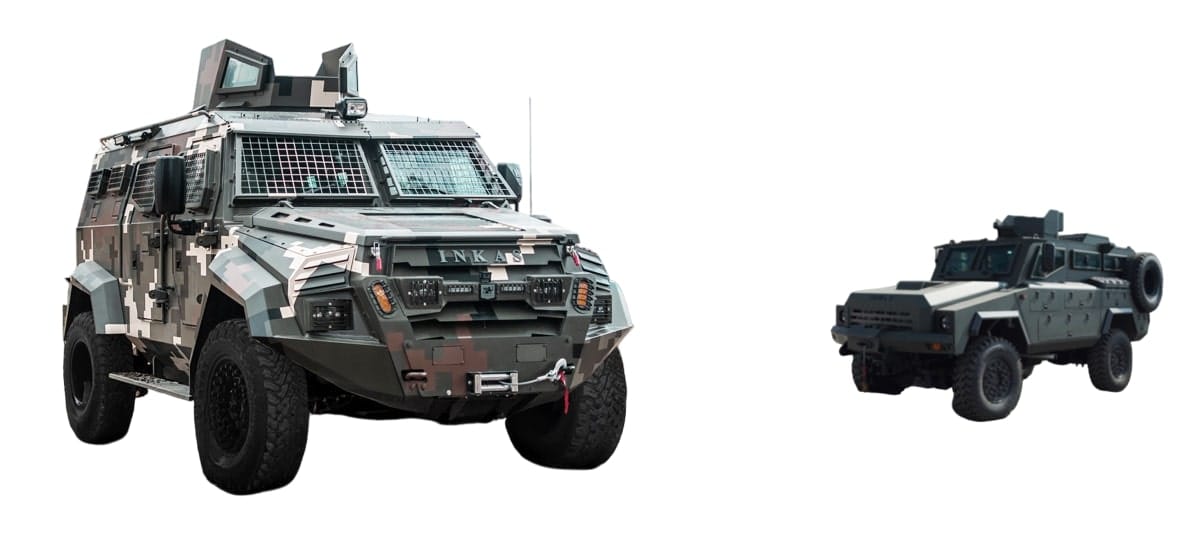
VAS-K Light
Land Vehicle Cladding Panel
- STANAG 2
- 42 kg/m²
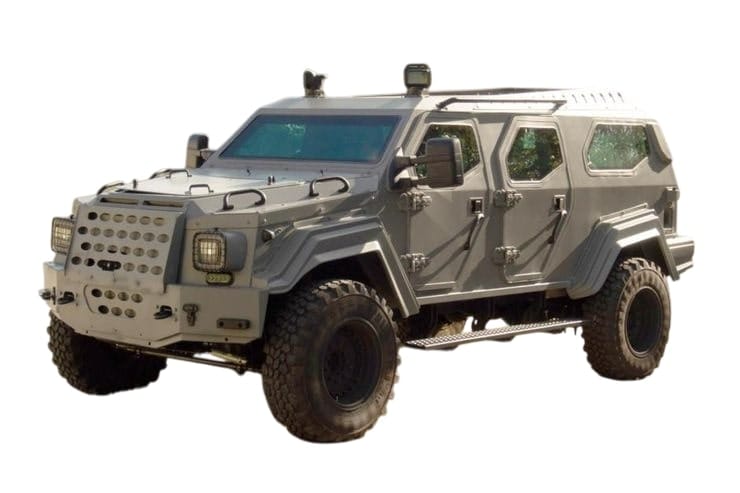
VAS-K Medium
IED+AP Protected Module
- STANAG 3
- 58 kg/m²
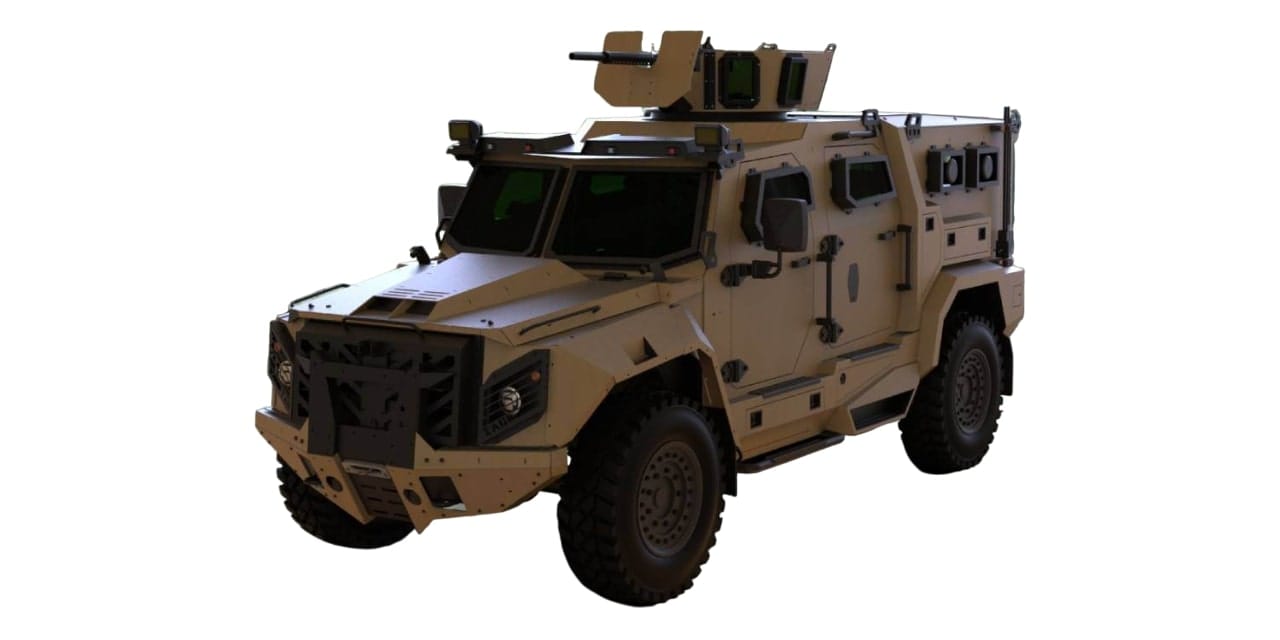
VAS-K Heavy
Heavy Vehicle Modular Plate
- STANAG 4
- 85 kg/m²
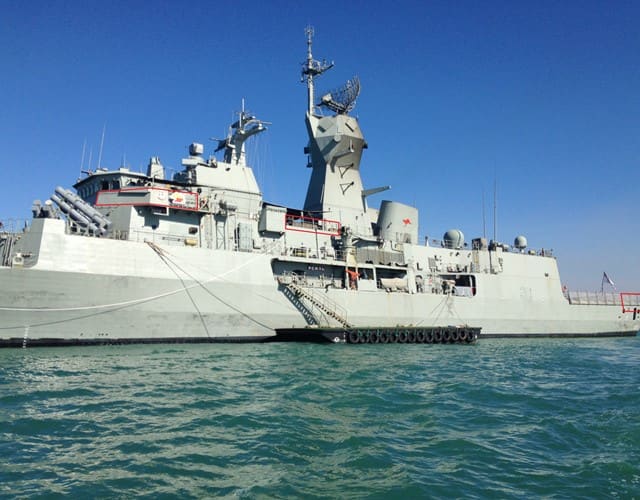
NavalArmor M-3
Naval Platform Panel
- STANAG 3
- 48 kg/m²

AeroArmor A-2
Aerial Critical Systems
- STANAG 2
- 28 kg/m²
Frequently asked questions
Is STANAG 4569 the same as NIJ?
No. NIJ standards cover personal body armor, while STANAG 4569 covers vehicles. Some test rounds overlap; the 7.62×51 mm M80 ball round, for example, appears in both.
What does "level 2a" mean?
It is the mine level 2 test with a 6 kg blast mine detonated under a wheel or track. "2b" is the same charge detonated under the centre of the vehicle.
Can a single armour plate be "STANAG level 4"?
A plate or panel can be tested against the level 4 kinetic energy round. Whether a vehicle reaches level 4 depends on the whole design, including joints, glazing and mine protection.