What is a ballistic plate?
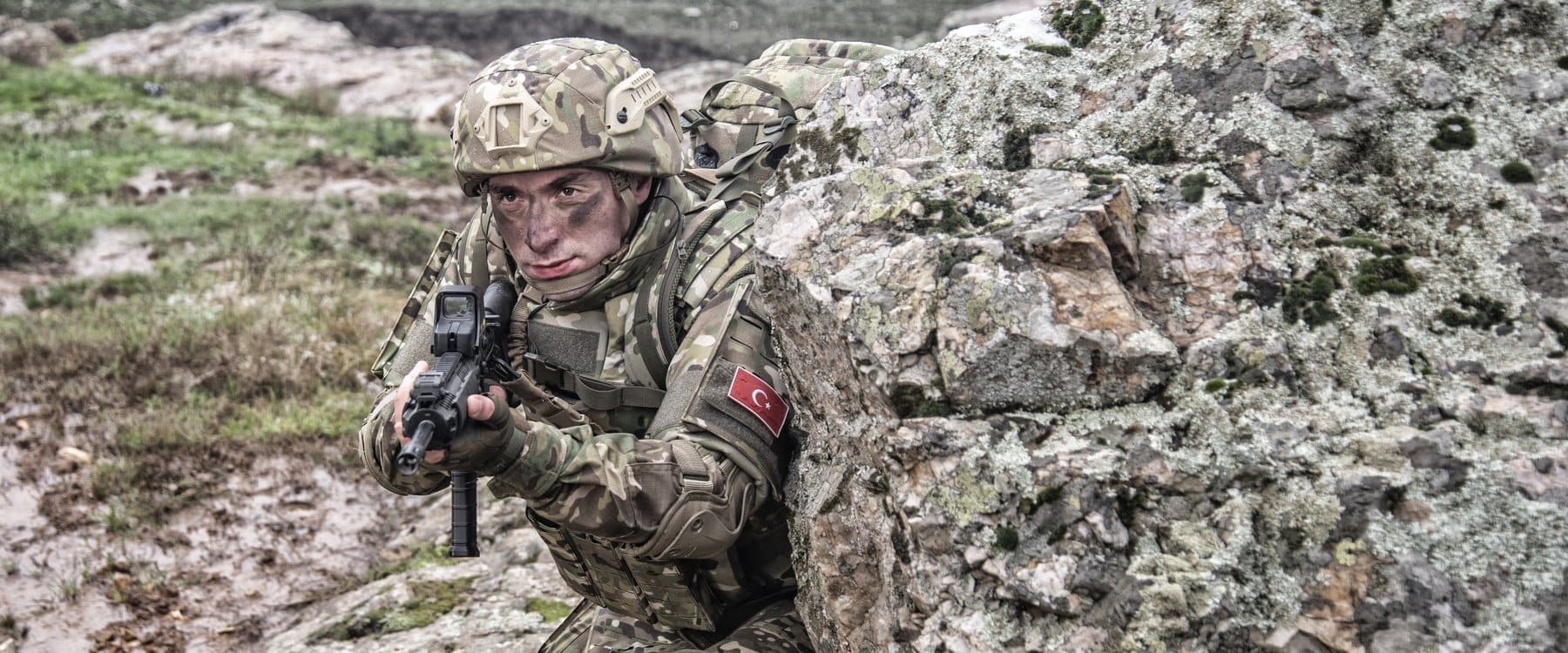
A ballistic plate, also called an armor plate, hard plate or body armor plate, is the rigid insert carried in the front and back pockets of a ballistic vest or plate carrier. Flexible soft armor panels are mostly defined against handgun rounds; plates are used to protect the vital organs in the chest and back against rifle rounds.
Four questions are a good starting point for any plate: which threat is it defined against (level), what is it made of (material), does it work on its own or together with soft armor, and what size and cut is it? This guide covers them in that order. The levels and weights of our products are on the ballistic plates page.
Choosing a level: NIJ III, III+ and IV
Plate levels are most often stated according to the US National Institute of Justice (NIJ) Standard-0101.06. It has two rifle levels, III and IV, and the industry also uses the term III+. NIJ 0101.07 and 0123.00, published in 2023, rename the rifle levels RF1, RF2 and RF3.
| Level | Test round in the standard | New name | Note |
|---|---|---|---|
| NIJ III | 7.62×51 mm NATO M80 FMJ, 9.6 g · 847 m/s | RF1 (with two added rifle rounds) | Baseline rifle level against a common rifle round |
| III+ | Not defined in the standard | — | Industry term for threats beyond Level III; read the scope from the test report |
| RF2 | RF1 rounds + 5.56×45 mm M855 · 950 m/s | New system only | Intermediate rifle level introduced with 0101.07 / 0123.00 |
| NIJ IV | .30-06 M2 armor-piercing, 10.8 g · 878 m/s | RF3 | Level defined against an armor-piercing rifle round |
Choose the level from the threat you actually expect. Higher levels usually mean heavier and thicker plates, so a level above your need adds load for no benefit. Which extra rounds a III+ plate covers varies between manufacturers, so when comparing III+ with Level IV, put the round lists and velocities side by side.
There is no NIJ Level 5 or Level 6: the rifle levels end at IV (RF3 in the new system). Handgun levels and the full test tables are in our NIJ protection levels guide.
Materials: ceramic, polyethylene (UHMWPE) and steel
Most plates are made from one of three material families. The choice is a balance of weight, thickness, cost and behaviour under multiple hits. The comparison below shows general trends, not the values of a single product.
| Material | How it works | Weight and thickness | Multi-hit | Cost |
|---|---|---|---|---|
| Ceramic + composite backing (Al₂O₃, SiC, B₄C) | The hard ceramic face breaks and erodes the bullet; a UHMWPE or aramid backing catches fragments and spreads the remaining energy | Medium weight and thickness; depends on the ceramic | Cracks around the impact; depends on the design | Medium–high |
| Polyethylene (UHMWPE) | Pressed fibre layers catch and slow the bullet and spread its energy | Light; thicker for the same level | Usually good | Medium–high |
| Steel | A hard steel face stops and shatters the bullet | Heavy; thin | Usually good | Low |
Ceramics differ too: for the same protection, alumina (Al₂O₃) is usually heavier and more economical, boron carbide (B₄C) is clearly lighter but more expensive, and silicon carbide (SiC) sits in between. A ceramic face is common in Level IV plates, which are defined against an armor-piercing round.
All-polyethylene plates are light, and UHMWPE fibre is lighter than water. On its own, however, it often falls short against steel-core and armor-piercing rounds and can be affected by high temperatures. Steel plates are thin and durable but heavy; because the bullet breaks up on the surface, they need a face coating against spall.
In İpek product data, HardPlate L-IV is listed as SiC ceramic and UHMWPE and HardPlate III as a ceramic strike-face plate; for HardPlate III+, technical information is provided on request.
Stand-alone vs in-conjunction (ICW)
A stand-alone (SA) plate reaches its stated level with no soft armor behind it. An in-conjunction (ICW) plate reaches that level only together with a specific soft armor panel, so the level applies to that pair only. ICW plates are often thinner and lighter, but the soft panel inside the vest becomes part of the system.
When comparing offers, ask which configuration the level belongs to and, for ICW plates, which soft panel was used in the test. In İpek product data, HardPlate L-IV is listed as a stand-alone plate; for the other plates, the configuration is stated in the quotation.
Cut and curve: SAPI, shooter's cut, swimmer cut
The shape (cut) of a plate decides how much of the torso is covered and how freely the arms can move. Common cuts:
- SAPI / ESAPI cut: derived from the US Army plate shape, with chamfered top corners. Sizes run from XS to XL.
- Shooter's cut: the top corners are cut further to leave room for the shoulder and the rifle stock.
- Swimmer cut: the top corners are cut even deeper; more arm movement, less coverage.
- Square (full) cut: no corners removed; wider coverage, more restricted movement.
Plates are made flat, single-curve (curved horizontally only) or multi-curve (curved both horizontally and vertically). Curvature helps the plate sit closer to the body. NIJ 0101.07 added a shot at the crown, the highest point of a curved hard plate, to its test layout; according to NIJ, this location may be more vulnerable to penetration depending on the materials and manufacturing methods used.
Typical plate sizes
The table converts to centimetres the approximate sizes that public sources give in inches for the US Army SAPI/ESAPI size system. The values are for guidance only, vary by a few millimetres between manufacturers and are not the sizes of İpek products.
| Size | Approx. dimensions (width × height) | Note |
|---|---|---|
| XS | 18 × 29 cm | SAPI / ESAPI |
| S | 22 × 30 cm | SAPI / ESAPI |
| M | 24 × 32 cm | SAPI / ESAPI |
| L | 26 × 34 cm | SAPI / ESAPI |
| XL | 28 × 36 cm | SAPI / ESAPI |
| Typical commercial size | 25 × 30 cm (10 × 12 in) | Mostly shooter's cut |
A common rule for finding the right size: the top edge of the front plate sits near the notch at the top of the breastbone, the sides roughly cover the nipples, and the bottom edge stays a few fingers above the navel. The exact fit is confirmed by trying the plate in the user's carrier. The size and cut of İpek plates are set in the quotation to suit the carrier.
Plate carrier fit
In a plate carrier, rifle protection comes from the plate; the carrier holds it in the right place. The pocket must match the plate's size and cut: a pocket that is too large lets the plate shift, and one that is too small will not take it at all. Polyethylene plates are usually thicker than ceramic or steel plates of the same level, so pocket depth matters too.
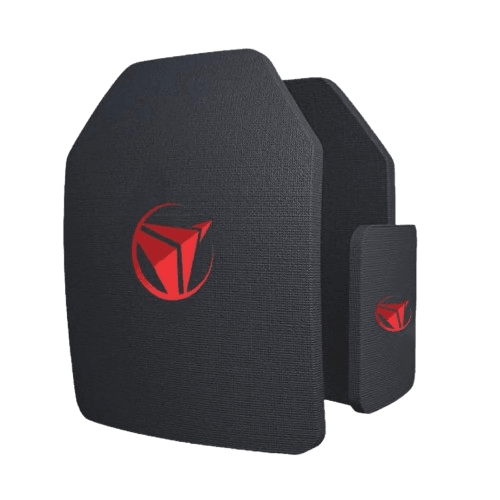
Besides front and back plates, some carriers take side plates in cummerbund pockets. The total load is the sum of plates, vest and attached equipment, and on long missions its distribution between shoulders and waist is decisive. Our MOLLE plate carrier and modular vest options are on the ballistic vests page.
Blunt trauma and backface deformation
Even when a plate stops the bullet, impact energy is transferred to the body. In testing it is measured as the depth of the dent left in the clay backing behind the armor (backface deformation, BFD); the limit in NIJ 0101.06 is 44 mm. Two plates of the same level can differ here; the figure appears in the model's test report.
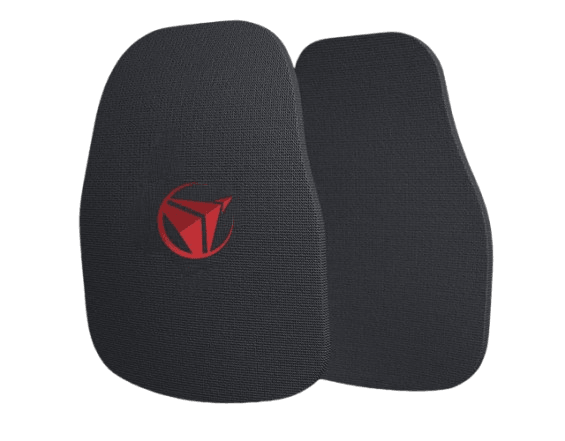
A trauma pad behind the plate can help reduce the felt impact, but it does not change the plate's protection level and does not replace the soft panel an ICW plate was tested with.
Service life, care and storage
- A plate that has been hit or has taken a heavy impact should be replaced, not reused.
- Ceramic plates are sensitive to drops on hard surfaces; cracks may form that are not visible from outside. After a suspicious impact, have the plate checked.
- Store plates flat and dry, away from direct sunlight and heat sources; polyethylene can be affected by high temperatures.
- Do not use a plate whose cover is torn or swollen or whose layers have separated.
- Service life and storage conditions are the values stated by the manufacturer; for İpek plates, technical information is provided on request.
Questions to ask before you buy
- Level and standard: is the level based on NIJ 0101.06 (III, IV) or on NIJ 0101.07 / 0123.00 (RF1, RF2, RF3)? If it is III+, which extra rounds are covered?
- Configuration: was the plate tested stand-alone (SA) or in conjunction (ICW) with a named soft panel?
- Material and weight: is the plate ceramic, polyethylene or steel, and which size and cut does the stated weight refer to?
- Size, cut and curve: do they fit the pocket of your carrier?
- Multi-hit: do the documents state how the plate was tested against more than one hit?
- Documents: which laboratory issued the test report for the level, and does it cover the model and size you are buying?
- Service life and storage: what service life and storage conditions does the manufacturer state?
The levels and weights of İpek plates are listed on the product pages; technical information is provided on request.
İpek ballistic plates
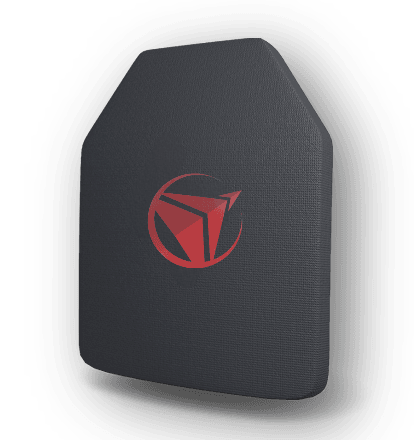
Our plate models with the protection level and weight stated in our product data. Click a model for its technical page.
Frequently asked questions
What does a Level IV plate stop?
In NIJ 0101.06, Level IV is tested with the .30-06 M2 armor-piercing round (10.8 g, 878 m/s). That is the standard's definition; which rounds a specific model was tested against is shown in that model's test report.
How much does a Level IV plate weigh?
Most Level IV plates have a ceramic face on a polyethylene (UHMWPE) backing; weight depends on the type of ceramic (alumina is heavier, SiC and B₄C are lighter), the size and the cut. In our product data, HardPlate L-IV (SiC ceramic and UHMWPE) is listed at 2.6 kg; the size and cut this weight refers to are stated in the quotation.
Is there a Level 5 or Level 6 plate?
Not in NIJ: the rifle levels of NIJ 0101.06 are III and IV, and NIJ 0123.00 uses RF1, RF2 and RF3. Labels such as Level 5 may belong to another standard or to a manufacturer's own naming; check the standard and the round list in the offer.
Ceramic or steel plates?
Ceramic plates are usually lighter at the same level and are common against armor-piercing threats, but they are sensitive to drops. Steel plates are thin, durable and economical, but heavy, and they need a coating against spall. The choice depends on the threat, the weight target and the conditions of use.
Can a plate be reused after it has been shot?
No. A plate that has been hit may have reduced protection and should be replaced.